Carpenter Ants in Oregon: What Homeowners Need to Know
Oregon's wet weather makes carpenter ants one of the most common pest issues we see. Here's what to watch for, how they damage a home, and what actually keeps them away.
By Renae McKague
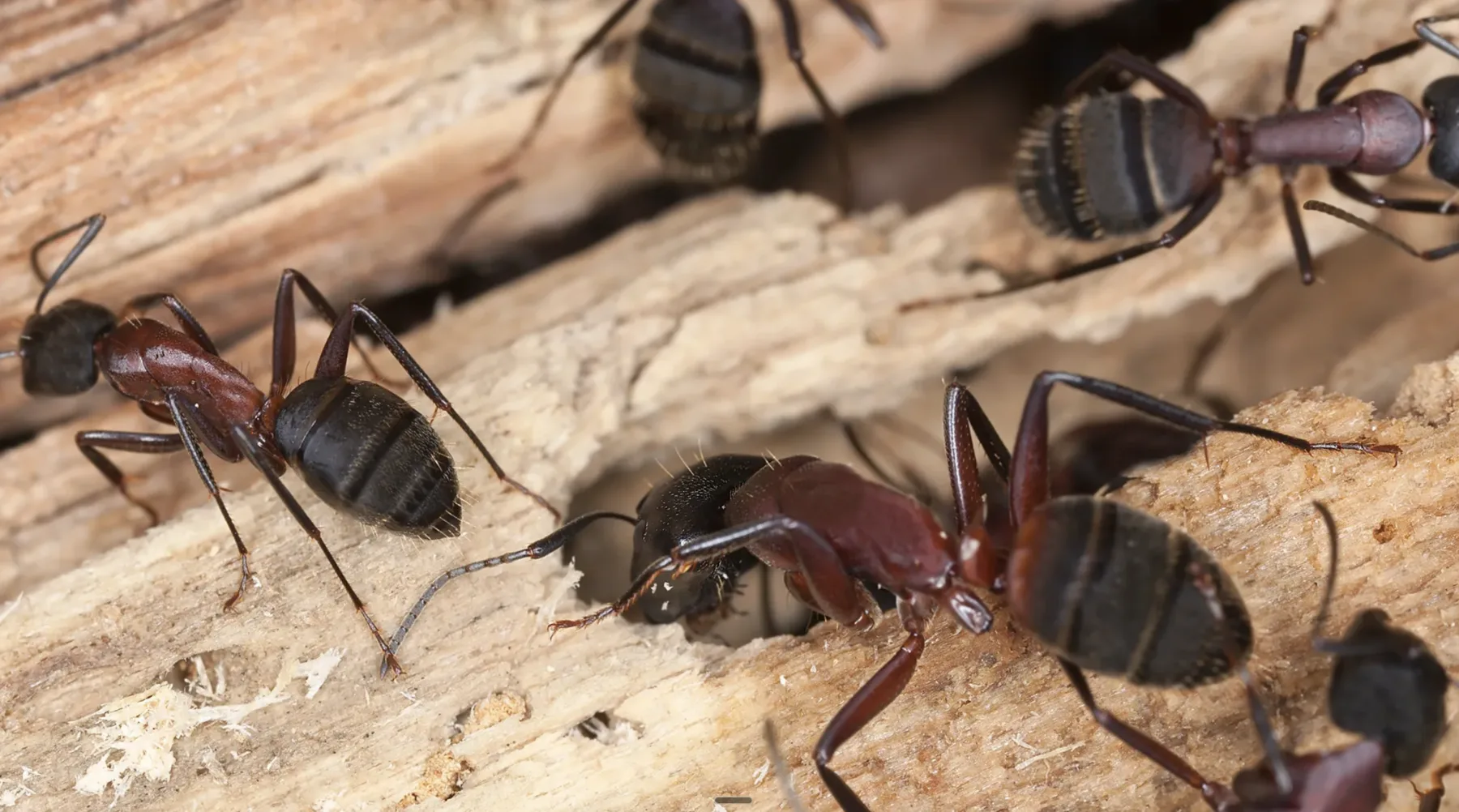
Carpenter ants are incredibly common in Oregon, especially when the weather gets wet.
When we get heavy rain, pooling water, or even a little flooding, the wood in and around buildings can become damp. That's when we start seeing more carpenter ant activity.
Carpenter ants are attracted to wet, damaged wood. They burrow into it to build their nests, and over time, they can cause serious damage to a home.
Here's what we recommend homeowners watch for and what you can do to prevent a problem.
What are the signs of carpenter ants in your home?
One of the most common signs is something called frass.
Frass is the material carpenter ants leave behind when they excavate wood. It looks like little piles of sawdust or very fine bark dust.
You might see these little piles outside your home, along the siding, or inside near trim boards and walls.
Other things to watch for include:
- Large ants traveling along your siding or foundation
- Ant trails around wood piles, fences, or outbuildings
- Pooling water around your foundation
- Wet or rotting wood near your home
- Gutters that are clogged or running water down the side of your house
When our technician Jess is inspecting a property, he'll look for those conditions first. If he sees pooling water or a gutter that's draining against the house, he'll start looking for ant activity.
A lot of times, he'll find them traveling under the siding or along the outside of the building.
Can carpenter ants live inside your walls?
Yes, they can live inside your walls without you knowing it.
Sometimes they're in there for quite a while before you notice anything.
Eventually, they may excavate enough wood near a trim board or another opening that frass starts coming out. That might be the first visible sign of a problem.
That's one reason we recommend regular inspections, including crawl space inspections. If there's obvious activity or damage in those areas, we want to catch it before it becomes a bigger issue.
Do carpenter ants eat wood like termites?
No. Carpenter ants and termites damage wood differently.
Carpenter ants burrow through wood to make room for their nests. They remove the wood as they go, which is where that sawdust-like frass comes from.
Termites actually feed on the wood.
People sometimes confuse carpenter ants with termites because both can damage wooden structures. Carpenter ants are generally larger than the little ants you might normally see around your kitchen, but size alone isn't enough to identify them.
In Oregon, we also have a large carpenter ant species called the Modoc carpenter ant. Those can be particularly big.
If you're not sure which insect you're seeing, it's worth having someone identify it.
How much damage can carpenter ants cause?
If a carpenter ant problem goes on long enough, the damage can become serious.
They can excavate wood in areas that are important to the structure of your home. In a severe infestation, that can mean major reconstruction.
Sometimes people don't realize there's a problem until they notice something like a dip in the floor or damaged wood around a beam.
Not every carpenter ant infestation causes that level of damage, but it's not something we recommend ignoring.
The sooner you find out where they're nesting and what's attracting them, the easier it is to address the problem.
Why are carpenter ants so common in Oregon?
We have a lot of the conditions carpenter ants like.
We get plenty of rain, we have wooded properties, and people like to keep firewood stacked outside their homes.
Wet wood, dead trees, fallen branches, and wood piles can all provide places for carpenter ants to nest.
Sometimes the problem starts somewhere else on the property.
You might have a tree that blew down and has been sitting there for a while. Or a neighboring property might have dead or rotting wood where carpenter ants are nesting.
Once they're established, you may start seeing trails of ants traveling toward other wood structures.
And if you've got firewood stacked right up against your house, you're making it easier for them to get close to the building.
How do you get rid of carpenter ants?
The first thing we recommend is an inspection.
At Wildwoods Pest Control, we offer free inspections so we can look at the activity and figure out what's going on.
Sometimes removing wet or damaged wood takes care of the nesting area. But that doesn't always mean the entire problem is gone.
If we're continuing to see carpenter ants in different areas of the home, we start looking more closely at what we call conducive conditions.
Conducive conditions are simply the things around your property that make it easy for carpenter ants to stick around.
That could be wood stacked against the house, dead and dying trees, wet leaves and debris, or water that isn't draining properly.
We can recommend treatment based on what we find, but we also want homeowners to address those conditions. Otherwise, you're leaving the things that attracted the ants in the first place.
How can you prevent carpenter ants from coming back?
The biggest thing we tell homeowners is to keep those conducive conditions under control.
In Oregon, that's not always easy because we get so much rain. But there are several things you can do:
- Keep your gutters clean. Make sure water isn't running down the side of your house or pooling around the foundation.
- Move firewood away from your home. Don't keep wood piles stacked against your siding.
- Remove dead and dying wood. If you've had a tree fall or you've got old wood debris sitting on the property, get it hauled off.
- Keep leaves and wet debris cleaned up. Pay attention to areas where moisture collects.
- Trim trees and bushes away from your house. Don't let branches or large bushes stay in contact with the siding or roof.
- Watch wood fences and landscape borders. Pay extra attention to ant activity around wooden walkways, fencing, and other outdoor structures.
- Repair or replace water-damaged wood. If you've got a moisture problem, take care of it.
For homeowners who want to be proactive, we often suggest quarterly pest control treatments.
We also offer seasonal treatments that can help manage carpenter ant activity during Oregon's wet weather.
Treatment can help, but keeping the property maintained is just as important.
What should you do if you find carpenter ants or frass?
If you're finding large ants around your home, or you're seeing little piles of sawdust-like material near the siding, walls, or trim, have it inspected.
You don't necessarily know how long they've been there or where they're nesting.
We offer free carpenter ant inspections at Wildwoods Pest Control. We'll look for signs of activity, check for conditions that might be attracting them, and recommend what needs to be done.
Keep your gutters cleaned, keep trees and bushes off the house, and get dead and dying wood removed.
If you take care of those things, you're making your property a lot less attractive to carpenter ants.